
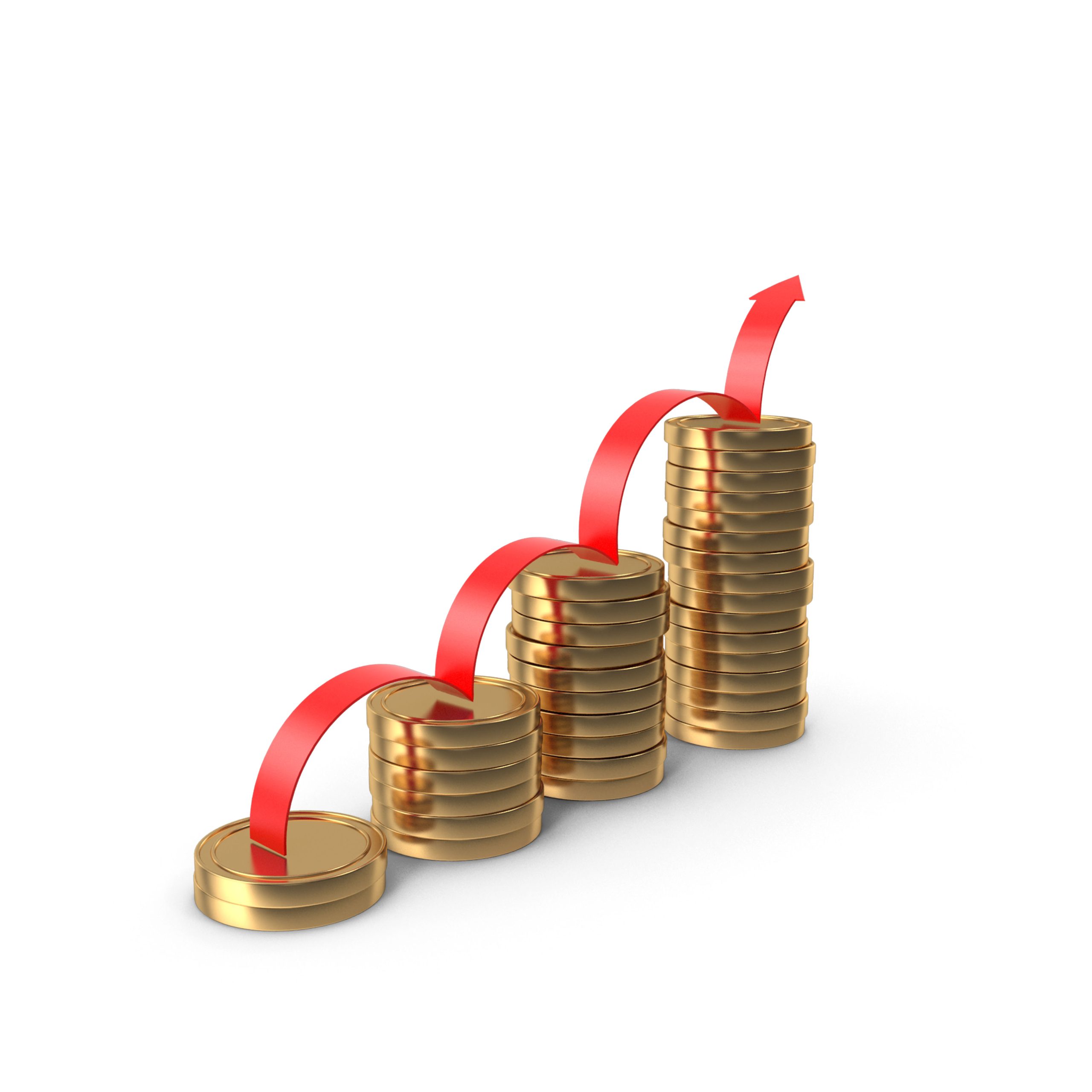
When it comes to building long-term wealth, few financial concepts are as powerful and transformative as compound interest.
Compound interest allows your money to grow exponentially by earning returns not only on your initial investment but also on the returns that accumulate over time. Simply put, you’re using your money to make even more money.
Whether you’re saving for retirement, building an investment portfolio, or creating generational wealth, understanding compound interest can significantly impact your financial future. The earlier you start and the longer you remain invested, the more dramatic the results can be.
This article explores how compound interest works, why time is its greatest ally, and how you can leverage it to achieve your financial goals.
What Is Compound Interest?
Compound interest is the process by which an investment earns interest on both the original principal and the accumulated interest from previous periods.
Unlike simple interest, which is calculated solely on the initial amount invested, compound interest continuously builds upon itself.
Simple Interest Example
Suppose you invest ₦1,000,000 at an annual interest rate of 10% using simple interest.
Annual earnings: ₦100,000 after 10 years – ₦1,000,000
Your investment grows steadily, but only because you are earning interest on the original ₦1,000,000.
Compound Interest Example
Now consider the same ₦1,000,000 invested at 10% annual compound interest.
Year 1: ₦1,100,000
Year 2: ₦1,210,000
Year 3: ₦1,331,000
Each year, interest is calculated on a larger balance. As a result, growth accelerates over time.
After 10 years, the investment would grow to approximately ₦2,593,742. Significantly more than with simple interest.
Why Compound Interest Is So Powerful
The real magic of compound interest lies in its ability to create exponential growth.
In the early years, growth may appear modest. However, as interest accumulates, each year’s gain becomes larger than the last.
Think of compound interest as a snowball rolling downhill:
- It starts small.
- It gathers more snow as it moves.
- Eventually, it becomes significantly larger than where it began.
This accelerating effect means that investors who remain patient often experience the greatest gains during the later stages of their investment journey.
The Importance of Time
Time is the single most important ingredient in compounding.
The longer your money remains invested, the more opportunities it has to compound.
Scenario 1: Early Investor
Sarah invests ₦20,000 per month from age 25 to 35
- Total contributions: ₦2,400,000
- She stops contributing at 35 but leaves the money invested until age 65
- The estimated value at age 65: about ₦69.8 million
Scenario 2: Late Investor
James invests ₦20,000 per month from age 35 to 65
- Total contributions: ₦7,200,000
- Estimated value at age 65: about ₦41.3 million
Assuming both earn an average annual return of 10%, Sarah could end up with a portfolio comparable to or even larger than James’s despite contributing far less.
The difference? Time.
Starting early allows compound growth to work for decades.
The Rule of 72
A simple way to estimate how quickly your money can double is by using the Rule of 72.
Formula:
72 ÷ Annual Interest Rate = Years to Double
Examples:
| Interest Rate | Approximate Time to Double |
| 4% | 18 Years |
| 6% | 12 Years |
| 8% | 9 Years |
| 12% | 6 Years |
This rule demonstrates how even small increases in investment returns can significantly accelerate wealth creation over time.
Consistency Matters More Than Perfection
Many people believe they need a large amount of money to start investing. In reality, consistency often matters more than the size of your initial investment.
Consider two investors:
- Investor A contributes 20k monthly.
- Investor B contributes nothing while waiting for the “perfect time.”
Over several decades, Investor A is likely to accumulate substantial wealth simply because they started early and remained consistent.
Regular contributions create multiple layers of compounding:
- New money is added regularly.
- Existing investments continue earning returns.
- Previous returns generate additional returns.
This creates a powerful cycle of growth.
The Cost of Waiting
One of the biggest mistakes investors make is delaying their investment journey.
Every year you postpone investing represents lost opportunities for compound growth.
Imagine investing 1,000,000,00 at an annual return of 10%:
| Time Invested | Portfolio Value |
| 10 Years | ₦2,593,742 |
| 20 Years | ₦6,727,500 |
| 30 Years | ₦17,449,402 |
| 40 Years | ₦45,259,256 |
Notice how the most dramatic growth occurs during the later decades. This is why delaying investments can have a surprisingly large impact on long-term wealth.
Compound Interest and Retirement Planning
Retirement investing is one of the most common applications of compounding.
Retirement accounts, pension funds, and long-term investment portfolios rely heavily on compound growth.
When you reinvest dividends and earnings instead of withdrawing them, your investments gain the ability to compound more effectively over time.
A disciplined retirement saver who consistently contributes over several decades can often accumulate a significantly larger nest egg than someone who contributes larger amounts later in life.
This highlights a critical principle:
It’s not just about how much you invest. It’s about how long your investments have to grow.
Factors That Influence Compounding
Several factors determine how powerful compound interest can be.
- Initial Investment
A larger starting amount naturally creates a stronger foundation for growth.
- Contribution Frequency
Making regular contributions increases the amount available for future compounding.
- Rate of Return
Higher returns accelerate the compounding process.
Even a 1% to 2% difference in annual returns can lead to substantial differences over decades.
- Time Horizon
Longer investment periods allow compounding to reach its full potential.
- Reinvestment of Earnings
Reinvesting dividends, interest, and capital gains maximises compound growth.
Common Mistakes That Reduce Compound Growth
To fully benefit from compound interest, investors should avoid certain pitfalls.
Frequently Withdrawing Funds
Removing money interrupts the compounding process and reduces future growth.
Trying to Time the Market
Many investors buy and sell based on emotions or short-term market movements, often missing periods of strong growth.
Starting Too Late
The longer you wait, the fewer opportunities compounding has to work.
Being Inconsistent
Skipping contributions can significantly reduce long-term results.
Building Wealth Through Compounding: Practical Tips
Start Today
The best time to start investing was yesterday. The second-best time is today.
Automate Investments
Set up automatic monthly contributions to build consistency.
Reinvest Dividends
Allow investment earnings to remain invested whenever possible.
Think Long Term
Focus on decades rather than weeks or months.
Stay Patient
Compound interest rewards discipline and patience more than frequent trading.
Real Wealth Is Built Gradually
Many people assume wealth is created through sudden windfalls, extraordinary talent, or high incomes. While those factors can help, history consistently shows that long-term investing and compounding are among the most reliable paths to financial growth.
The most successful investors understand that wealth creation is often a slow and steady process. They focus on consistency, patience, and allowing time to work in their favor.
Conclusion
Compound interest is one of the most powerful forces in personal finance. By earning returns on both your original investment and accumulated gains, it creates a cycle of growth that becomes increasingly powerful over time.
While compound interest may not produce dramatic results overnight, its impact over decades can be extraordinary. The sooner you begin, the greater the opportunity to harness its full potential and build lasting wealth for yourself and future generations.
In the world of investing, time is often more valuable than timing. And when combined with compound interest, it becomes the foundation upon which significant wealth is built.