
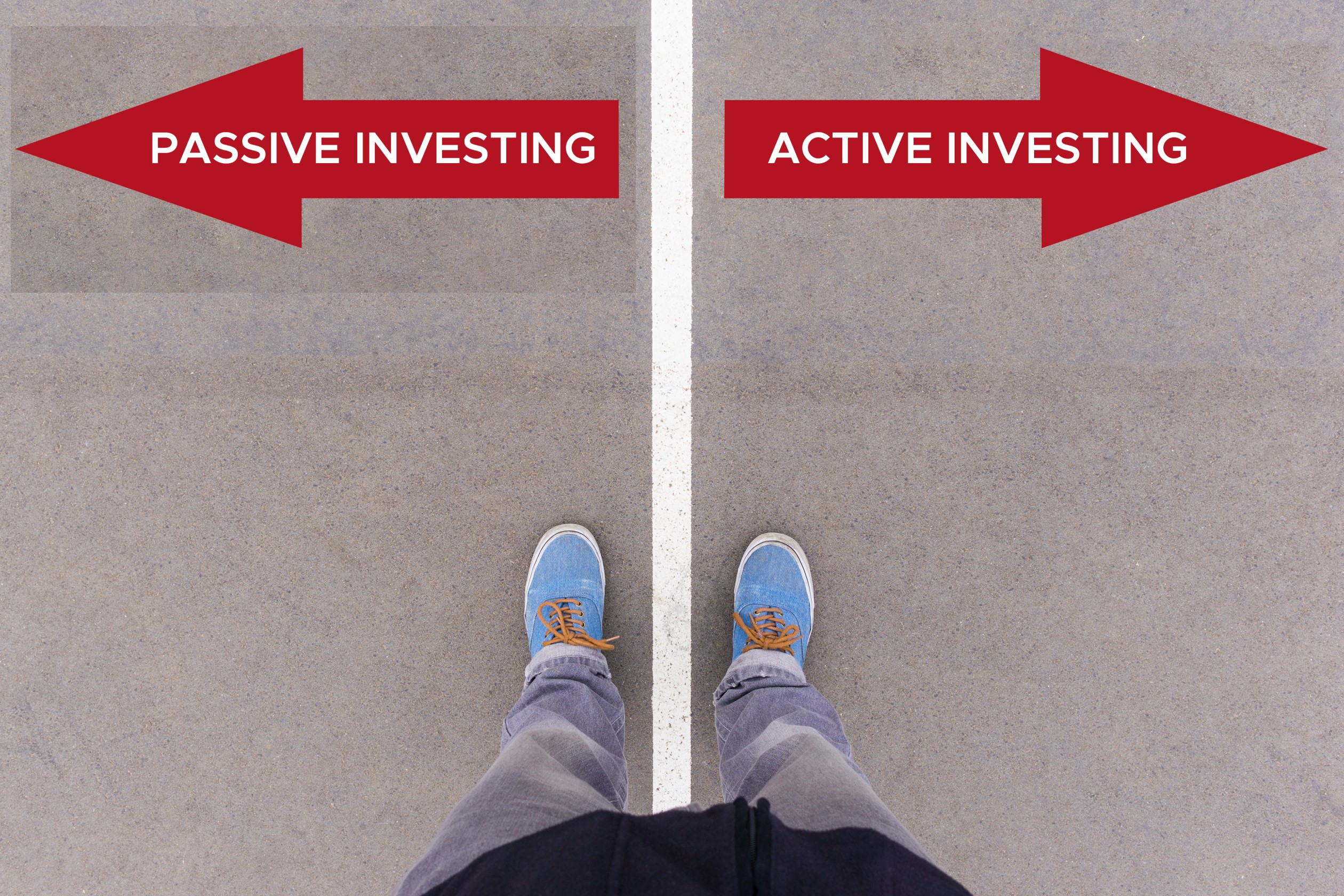
When building an investment portfolio, one of the fundamental decisions investors make is whether to adopt a passive or active investment strategy. These two approaches represent different philosophies about how financial markets work and how returns can be generated.
This article explains both strategies in a balanced, factual way, using data and practical context so that readers can evaluate which approach or combination best suits their needs.
Rather than viewing them as competing ideas, investors can understand their differences, strengths, and limitations to make better-informed decisions aligned with their goals, risk tolerance, and time horizon.
What Is Passive Investing?
Passive investing is a strategy that aims to match the performance of a market index rather than outperform it.
It is commonly implemented through:
- Index funds
- Exchange-Traded Funds (ETFs)
- Market-tracking portfolios
Instead of selecting individual securities, the investor owns a diversified basket that reflects the broader market.
Key features:
- Long-term “buy-and-hold” strategy
- Limited trading activity
- Lower management costs
- Broad diversification
The idea is based on the observation that markets tend to grow over time, making it difficult to consistently try to beat them.
What Is Active Investing?
Active investing involves making deliberate decisions to outperform the market through research, timing, and selection of specific investments.
This may include:
- Selecting individual stocks or bonds
- Rotating investments across sectors
- Adjusting portfolios in response to market and economic changes
Key features:
- Frequent buying and selling
- Research-driven decisions
- Higher flexibility
- Higher costs
Active investing relies on the belief that markets are not always fully efficient, allowing skilled investors to identify opportunities.
Comparing Performance: What the Data Shows
A large body of global research compares how both strategies perform over time.
- Only about 21% of actively managed funds outperformed passive funds over 10 years ending 2025
- Approximately 87%–92% of active large-cap equity funds underperformed their benchmarks over 15 years
- Over a 20-year horizon, close to 90% of active funds failed to beat the market
At the same time:
- Around 38% of active funds outperformed passive alternatives in 2025
What this suggests:
- Outperformance does occur, but it is less common
- Results can vary significantly depending on time period, market conditions, and asset class
Advantages and Limitations
Passive Investing
Advantages:
- Lower fees and cost efficiency
- Simplicity and ease of understanding
- Consistent exposure to broad market performance
- Reduced need for ongoing decision-making
Limitations:
- Does not aim to outperform the market
- Fully exposed to market downturns
- Limited flexibility to respond to short-term changes
Active Investing
Advantages:
- Possibility of outperforming the market
- Flexibility to respond to economic changes
- Ability to focus on specific sectors or opportunities
- Useful in less efficient markets
Limitations:
- Higher fees and trading costs
- Performance is not consistent
- Requires skill, time, or professional management
Relevance for Nigerian Investors
While much of the data comes from global markets, there are factors specific to Nigeria that may influence how these strategies are used.
- Market Structure
Some segments of the Nigerian market may be less efficient, which can create opportunities for active strategies.
- Currency Considerations
With the naira subject to fluctuations:
- Active allocation to foreign currency assets may help manage risk
- Interest Rate Environment
Nigeria often experiences changing interest rates, allowing active investors to shift between:
- Fixed income securities
- Equities
- Product Availability
Passive investing options (such as ETFs and index funds) are more limited locally, though they are expanding gradually.
Using Both Approaches Together
Rather than choosing one strategy exclusively, some investors combine both.
A common structure is:
Core–Satellite Approach
- Core (e.g., 60%–80%): Passive investments for stability and lower cost
- Satellite (e.g., 20%–40%): Active investments to target specific opportunities
This allows exposure to:
- Broad market growth
- Selective opportunities
Financial professionals often describe the two approaches as complementary rather than competing.
Key Questions to Consider
When deciding how to invest, it may be helpful to reflect on:
- Time horizon: Are the goals short-term or long-term?
- Risk tolerance: How comfortable is the investor with market fluctuations?
- Level of involvement: Is there time or expertise to actively manage investments?
Conclusion
Passive and active investing represent two different ways of approaching the same goal: growing wealth over time.
- Passive investing focuses on tracking the market efficiently and at low cost
- Active investing focuses on trying to outperform the market through strategy and analysis
Each comes with advantages and trade-offs, and outcomes can vary depending on the investor’s circumstances and market conditions.
Rather than viewing one approach as universally better, you might find that a mix of passive and active investments suits your needs, providing both stability and the potential for higher returns.
Understanding both provides a clearer foundation for making better-informed investment decisions.